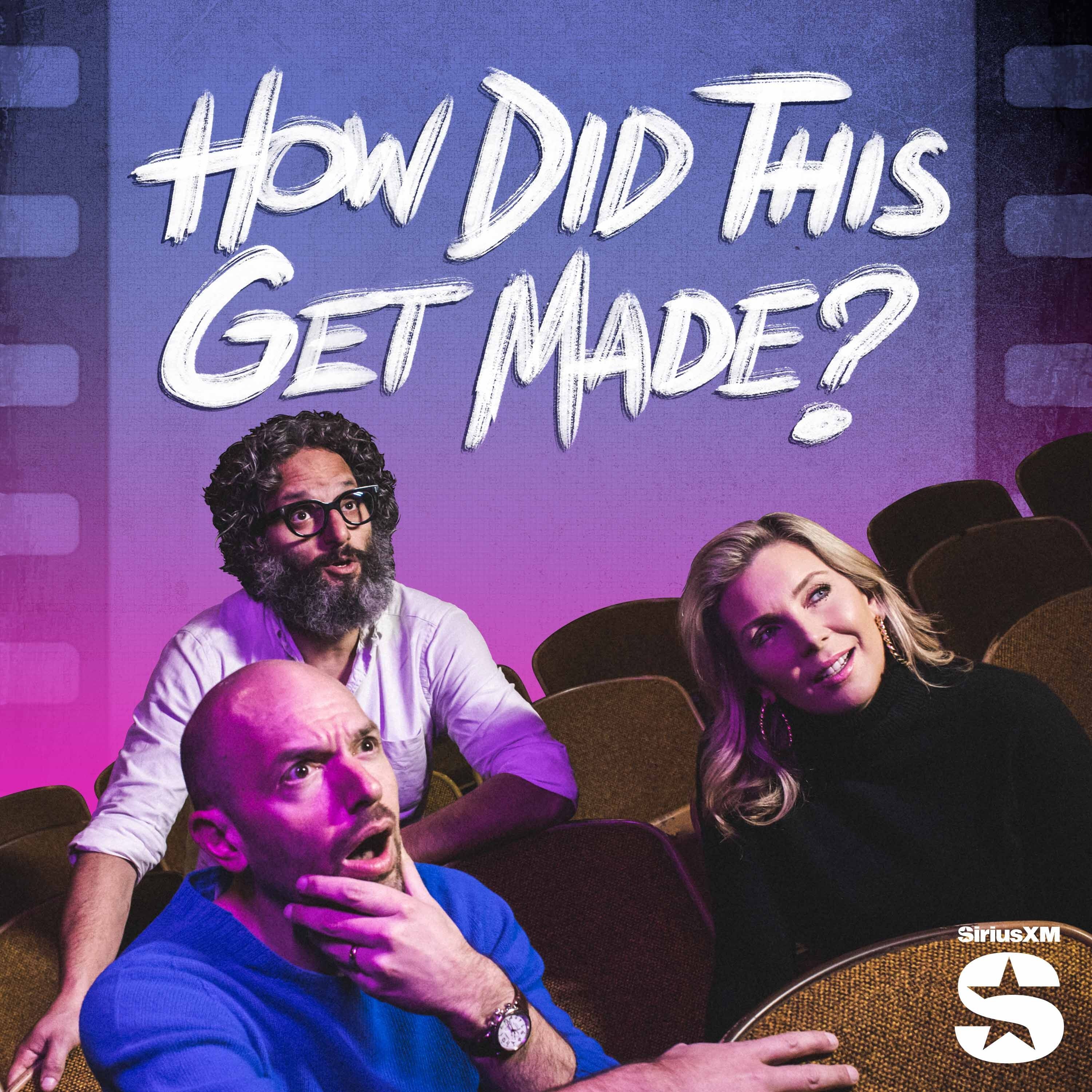
Monkeybone LIVE! w/ Rob Huebel
January 16, 2026
Key Takeaways Copied to clipboard!
- The central premise of *Monkeybone* is interpreted as a 'Drop Dead Fred situation wrapped in a Jacob's Ladder scenario,' revolving around a cartoonist trapped in his own creation, which is based on his uncontrollable erection.
- Director Henry Selleck was reportedly fired from *Monkeybone* and Christopher Columbus was brought in to make the film more palatable, potentially explaining voice changes like the one heard in the character Monkey Bone.
- The film features an unusually high-caliber cast, including Brendan Fraser, Rob Huebel's guest co-host, Chris Kattan, Whoopi Goldberg, and Bob Odenkirk, despite its poor critical reception and bizarre subject matter.
- The audience interaction revealed multiple attendees had personal experience with being in a coma, leading to unique insights about the film's themes.
- Griffin Newman passionately defended *Monkeybone* as a good and sensible film, contrasting with the hosts' initial confusion, and provided behind-the-scenes casting information, including that Ben Stiller was originally slated for Brendan Fraser's role.
- The discussion heavily explored the film as a commentary on crass commercialization of trauma, linking Stu Miley's artistic process to the creation of the *Drop Dead Fred* character and the concept of 'Downtown' as the collective subconscious.
Segments
Initial Reactions and Premise
Copied to clipboard!
(00:03:50)
Copied to clipboard!
- Key Takeaway: The film Monkeybone is described as a live-action/stop-motion movie about a cartoonist trapped in his creation, which is fundamentally based on a child’s erection.
- Summary: The live show in New York City immediately addresses the bizarre premise of Monkeybone, starring Brendan Fraser. The IMDb description is immediately dismissed as inaccurate by the hosts. The film holds a 21% on the Rotten Tomatoes Tomatometer and a 29% audience score.
Guest Introduction and Taglines
Copied to clipboard!
(00:07:05)
Copied to clipboard!
- Key Takeaway: HDTGM All-Star Rob Huebel is introduced, and the film’s bizarre taglines, including ‘get boned,’ are highlighted.
- Summary: Rob Huebel is welcomed as a special guest for the Monkeybone episode. The hosts share the movie’s taglines, one of which is ‘if it yells, if it swings, it’s gotta be monkey bone.’ The central theme is immediately linked to uncontrollable teenage erections.
Film’s Core Concept and Voice Acting
Copied to clipboard!
(00:08:47)
Copied to clipboard!
- Key Takeaway: The character Monkey Bone is established as Stu’s sentient, loose erection, and the voice acting for Monkey Bone shifts from sounding like Totoro to Steve Buscemi.
- Summary: The hosts confirm the central metaphor: Monkey Bone is Stu’s out-of-control penis. A key point of confusion is the voice acting for Monkey Bone, which sounds like Steve Buscemi in the film but different in the trailer. This voice change is later speculated to be due to studio interference.
Release Year and Studio Interference
Copied to clipboard!
(00:10:16)
Copied to clipboard!
- Key Takeaway: Despite feeling like a 90s film, Monkeybone was released in 2001, and director Henry Selleck was reportedly fired and replaced by Christopher Columbus.
- Summary: The film’s release year is established as 2001, placing it before September 11th. The hosts suggest that studio interference, specifically hiring Christopher Columbus to ‘fix’ the film after Selleck’s departure, explains tonal inconsistencies.
Cartoon Pilot and Stu’s Kink
Copied to clipboard!
(00:12:30)
Copied to clipboard!
- Key Takeaway: The opening cartoon pilot for Stu’s creation felt like a gross-out Ren & Stimpy style piece, and Stu’s stated fetish for ‘flabby arm flaps’ is noted as an unresolved plot thread.
- Summary: The opening cartoon is deemed a terrible pilot, reminiscent of Ren & Stimpy. Stu is portrayed as a purist artist frustrated by the commercialization of his work, even though the merchandise targets young children while the cartoon is adult-themed. The specific fetish Stu mentions for flabby arms is never revisited in the plot.
Downtown World and Coma Patients
Copied to clipboard!
(00:17:32)
Copied to clipboard!
- Key Takeaway: The underworld, Downtown, appears to be a purgatory populated by various figures, including nightmares and potentially other coma patients, though the rules of this realm are unclear.
- Summary: The dynamic between Stu (the id) and Monkey Bone (the ego/superego) is compared to Dr. Jekyll and Mr. Hyde. Downtown features bizarre characters like Joe Camel and Stephen King, leading to confusion over whether everyone there is also in a coma. The purpose of collecting ’nightmare juice’ from the inhabitants is also questioned.
Chris Kattan’s Performance
Copied to clipboard!
(00:31:04)
Copied to clipboard!
- Key Takeaway: Chris Kattan’s late appearance as a reanimated gymnast is singled out as an electric, scene-stealing performance featuring incredible physical comedy.
- Summary: Chris Kattan’s character, a reanimated gymnast with a broken neck, is praised for elevating the film’s third act. Stu, inhabiting Kattan’s body, displays unexpected physical prowess, raising questions about shared consciousness or abilities between the bodies. The hosts note the lack of explanation for how the gymnast died.
Sex Scene Details and Bridget Fonda’s Role
Copied to clipboard!
(00:41:36)
Copied to clipboard!
- Key Takeaway: The sex scene between Stu and Dr. Julie (Bridget Fonda) is awkward, featuring Fonda seemingly refusing to fully participate and Stu displaying his backside prominently.
- Summary: Bridget Fonda’s character, Dr. Julie, appears unwilling to be fully nude during the sex scene, wrapping a robe around herself. The scene is noted for Stu’s exposed backside, suggesting improvised or highly specific direction. Dr. Julie’s ethical behavior as a sleep doctor is heavily scrutinized by the audience members.
Audience Coma Experiences
Copied to clipboard!
(00:54:44)
Copied to clipboard!
- Key Takeaway: An audience member who was in a coma for three weeks provided a medical correction regarding Stu’s breathing tube removal upon waking, confirming it would have been fatal.
- Summary: An audience member named Emily, who experienced a three-week coma, pointed out a major medical inaccuracy: Stu waking up and having his breathing tube simply pop out without immediate death. This highlights the film’s disregard for realistic medical consequences, even within its fantasy framework. The hosts also noted the bizarre imagery of a dog’s nightmare involving castration.
Doctor Ethics and Terry Schivo
Copied to clipboard!
(00:58:29)
Copied to clipboard!
- Key Takeaway: The character Bridget Fonda plays was only Stu’s sleep doctor, not his primary physician with authority over life support decisions.
- Summary: The character Bridget Fonda portrays was identified only as Stu’s sleep doctor, lacking the authority to stop life support removal. A brief, contentious comparison was made to the Terry Schiavo case, highlighting the hosts’ differing sensitivities regarding controversial topics. The audience member dressed as Rose McGowan was noted for their costume choice.
Audience Q&A Begins
Copied to clipboard!
(01:00:07)
Copied to clipboard!
- Key Takeaway: Audience members began asking questions, including one about the perceived hatred of doctors on the show.
- Summary: The first audience member, Sajida, asked why the show seems to target doctors negatively. Another audience member described the comedic chaos of the third act involving surgeons chasing the reanimated corpse, including Kattan’s organs falling onto a barbecue during a car chase.
Ben Stiller Casting Inquiry
Copied to clipboard!
(01:01:32)
Copied to clipboard!
- Key Takeaway: An audience member confirmed that Ben Stiller was originally signed on to play the main character, Brendan Fraser’s role.
- Summary: The initial question concerned whether Ben Stiller was meant to play Brendan Fraser’s character, which was confirmed by an audience member. It was speculated that Stiller might have been intended for the role of John Turturro’s character, but the consensus settled on Stiller being the original choice for the lead. Paul Rubens was also mentioned as having been slated to voice the character Monkeybone.
Coma Survivor Experiences
Copied to clipboard!
(01:02:36)
Copied to clipboard!
- Key Takeaway: The show pivoted to only taking questions from audience members who have personally experienced a coma.
- Summary: The hosts decided to prioritize questions only from audience members who had been in a coma, leading to several people identifying themselves. One survivor described a DMT-like dream involving a maze and the fear of having their penis cut off, relating it to the film’s themes.
Drop Dead Fred Origin Story
Copied to clipboard!
(01:04:08)
Copied to clipboard!
- Key Takeaway: The creator of Drop Dead Fred, Liz Livingston, grew up next door to the person asking the question, and Carrie Fisher’s character name in the script was based on the questioner’s mother.
- Summary: A coma survivor shared that they grew up next door to Liz Livingston, the creator of Drop Dead Fred. The original script for Drop Dead Fred featured a character named after the questioner’s mother, Martha, which was later changed to Janie by director Carlos Shaw. This anecdote provided deep, personal context connecting the film being discussed (Monkeybone) to another piece of media referenced in the show notes (Drop Dead Fred).
Organ Trafficking and Capitalism
Copied to clipboard!
(01:06:26)
Copied to clipboard!
- Key Takeaway: The unethical doctors in Monkeybone were motivated by organ trafficking for profit, suggesting capitalism as the true antagonist.
- Summary: An audience member pointed out that the film depicted illegal organ trafficking, not just medical malpractice, as the doctors were motivated by money. This led to the conclusion that capitalism, rather than just unethical doctors, served as the primary enemy in the film’s narrative.
Griffin Newman’s Defense of Monkeybone
Copied to clipboard!
(01:07:23)
Copied to clipboard!
- Key Takeaway: Griffin Newman, co-host of the Blank Check podcast, passionately defended Monkeybone as a good, sensible film that makes sense.
- Summary: Griffin Newman joined the panel to defend Monkeybone, asserting that the hosts only watched it once and were ‘dilettantes’ to its world. He corrected casting facts, confirming Stiller dropped out late, and argued the film is a pre-9/11 time capsule reflecting hubris after surviving Y2K. Newman also explained that ‘Downtown’ represents Carl Jung’s collective unconscious, populated by pop culture figures and abstract nightmares.
Second Opinions and Song
Copied to clipboard!
(01:23:28)
Copied to clipboard!
- Key Takeaway: The ‘Second Opinions’ segment featured a listener giving five stars while incorrectly citing actors from Breaking Bad and Better Call Saul in the cast.
- Summary: Rob from Long Island gave Monkeybone five stars, providing a deliberately inaccurate plot summary that included actors from Breaking Bad and Better Call Saul. Tom McWaters then performed a song dedicated to ‘Brendan’s boner,’ referencing Jacob’s Ladder and the film’s themes.
Audience Ratings and Final Thoughts
Copied to clipboard!
(01:26:54)
Copied to clipboard!
- Key Takeaway: Monkeybone holds an 84% five-star rating across 1,925 reviews on an unspecified platform, often being compared favorably to Beetlejuice.
- Summary: Audience reviews showed strong support, with 84% of 1,925 ratings being five stars, including one comparison to Beetlejuice. The film was frequently misattributed to Tim Burton, despite being a Henry Selick film, which frustrated the director’s legacy. Jason concluded that while frustrating, the film was never boring, earning a ‘must-watch’ status for its chaotic engagement.
0:00 / 0:00