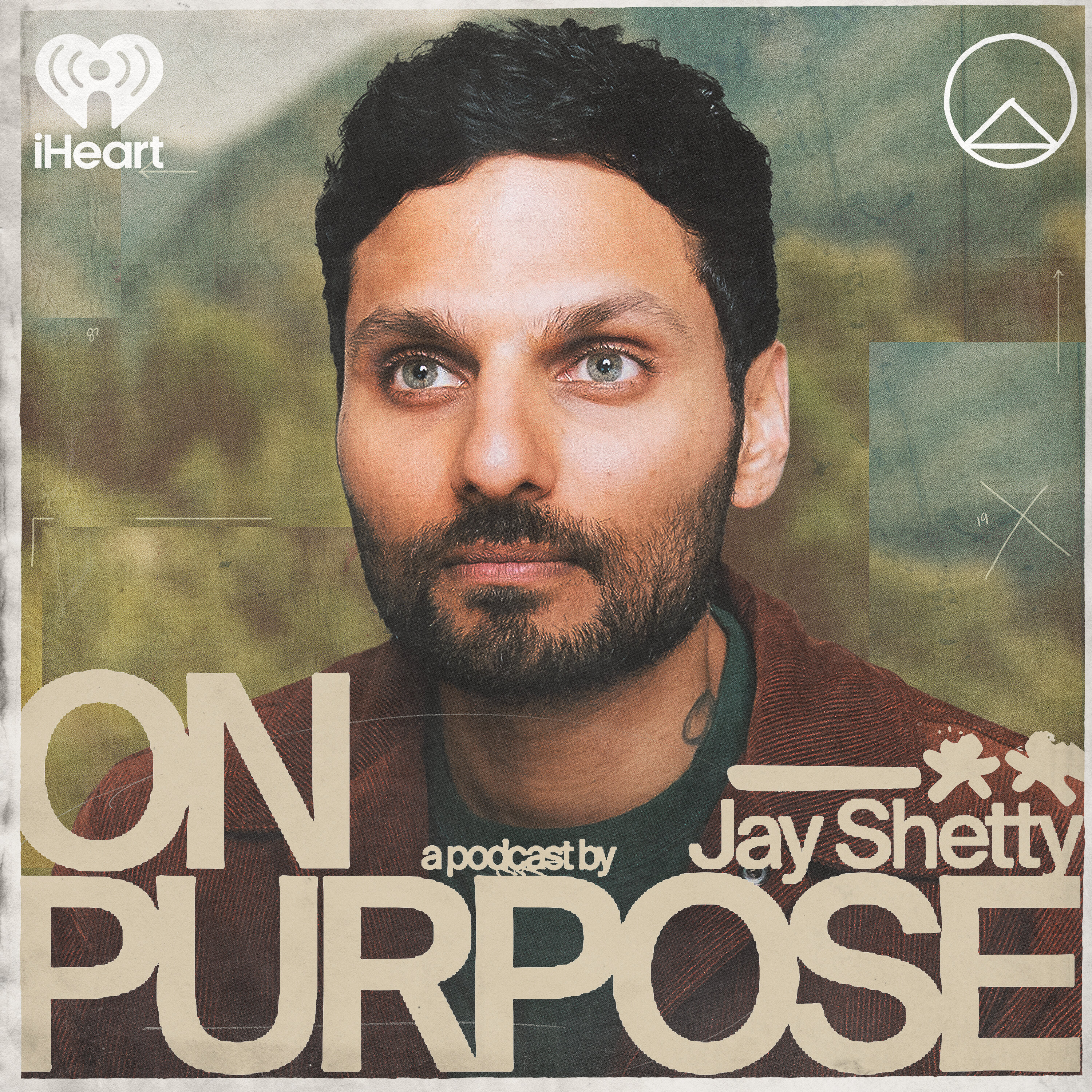
Judd Apatow: Fear of Rejection Holding You Back? THIS Trick Will Silence the Inner Critic & Help You Feel Confident to Create
October 15, 2025
Key Takeaways Copied to clipboard!
- Viewing failure as the path to success, where every unsuccessful joke teaches what not to do, is crucial for creative growth.
- Early career success, like Judd Apatow's experience with *The Ben Stiller Show*, can come from unexpected opportunities rather than strictly climbing the traditional ladder.
- Creatives must protect their mental state and limit exposure to overwhelming world problems to maintain the necessary focus for imaginative work and flow state.
- Creative expression, such as handwriting and doodling, may be diminished by modern technology, potentially leading to a loss of beautiful forms of self-knowledge and expression.
- Trauma responses, often rooted in childhood experiences like divorce, can be projected onto professional relationships, causing irrational fight-or-flight reactions to creative feedback.
- True success in creative endeavors is measured not by external validation or box office numbers, but by the work being meaningful to the creator and connecting with others, requiring a balance between passionate commitment and detachment.
Segments
Family Humor and Respect
Copied to clipboard!
(00:03:33)
Copied to clipboard!
- Key Takeaway: Children often withhold approval of a parent’s work as a form of playful resistance or lack of respect.
- Summary: Judd Apatow shared that his children initially found his stand-up unfunny, a common dynamic where kids test parental authority. He noted that realizing his daughters got along was a significant parental milestone. The key to parenting success is fostering a ‘fire to chase a dream’ in children, prioritizing ambition over strict discipline or grades.
Early Education and Mentorship
Copied to clipboard!
(00:07:13)
Copied to clipboard!
- Key Takeaway: Early labeling by school tracking systems can negatively impact a child’s perception of their own intelligence limits.
- Summary: Apatow described being placed in a lower academic track at age 12, which he felt limited his perceived intelligence. His entry into USC Film School was secured by a humorous essay promising future donations, rather than just grades. High school radio interviews with comedy icons like Jerry Seinfeld provided crucial early education and demonstrated the value of kindness in the industry.
Community Over Competition
Copied to clipboard!
(00:12:28)
Copied to clipboard!
- Key Takeaway: Viewing highly talented peers as friends rather than rivals fosters collaboration and prevents feelings of competitive depression.
- Summary: Apatow felt he could not compete with talents like Jim Carrey or Adam Sandler, instead focusing on supporting their creativity, which felt like the greatest reward. The early comedy scene felt like a community, similar to groups like Monty Python, making the goal finding like-minded people to collaborate with. This collaborative mindset led to co-creating The Ben Stiller Show.
Failure as a Stepping Stone
Copied to clipboard!
(00:15:59)
Copied to clipboard!
- Key Takeaway: Projects initially deemed failures, like a canceled TV show, can later be validated by critical acclaim, such as an Emmy win.
- Summary: The cancellation of The Ben Stiller Show after 12 episodes, despite winning an Emmy six months later, taught Apatow that the world takes time to recognize interesting work. Similarly, the movie Heavyweights, considered a failure at the time, gained a lasting audience on Disney Plus years later. It takes time for the world to truly define whether a creative endeavor succeeded or failed.
Balancing Artistic Belief and Audience
Copied to clipboard!
(00:25:27)
Copied to clipboard!
- Key Takeaway: Great creative work requires balancing personal artistic belief with the necessity of connecting emotionally with the audience.
- Summary: Apatow’s main bar for creation is whether he likes and is proud of the work, followed by assessing how many people might appreciate that niche. He learned from James L. Brooks that if the audience is not emotionally touched or laughing, the work has failed, regardless of the creator’s intent. Comedy is often found close to painful situations, meaning a strong emotional story structure can be adapted for humor.
Navigating Modern Creativity and AI
Copied to clipboard!
(00:27:02)
Copied to clipboard!
- Key Takeaway: The current creative landscape risks homogenization due to algorithmic rewards, making unique, unexpected ideas harder to surface.
- Summary: The danger of AI tools like ChatGPT is that they allow creators to bypass critical thinking, similar to how GPS diminishes navigational skills. While AI is useful for research, using it to write scenes risks losing the self-knowledge gained through the creative struggle. Doodling and handwriting, activities now often eliminated, were historically linked to better brain connectivity and flow state.
Managing Creative Self-Doubt
Copied to clipboard!
(00:43:35)
Copied to clipboard!
- Key Takeaway: Self-doubt often manifests as an internal pressure to be immediately good, which blocks the necessary state of pure creative output.
- Summary: Apatow admitted that shifting from performing to writing felt like a betrayal because he lacked belief in his writing ability compared to his peers. To combat the inner critic during writing, he uses tricks like writing in a plain Word document without formatting or setting a timer to ‘babble’ without stopping to bypass perfectionism. This allows the subconscious to speak, often revealing unexpected, valuable ideas.
Finding Joy Post-Creation
Copied to clipboard!
(00:50:29)
Copied to clipboard!
- Key Takeaway: After completing a project, creatives can become disassociated from the construction process, allowing them to enjoy the final work like an audience member.
- Summary: Apatow feels that once a movie is finished, the characters exist in a separate dimension, and he likes them, even if he doesn’t rewatch his own work due to knowing the story. He recently enjoyed The 40-Year-Old Virgin for the first time in 20 years because he had forgotten most of the jokes. Jokes that rely on mocking people for simply being themselves are less sustainable today than humor derived from shared, relatable emotional struggles.
Creativity and Technology Loss
Copied to clipboard!
(00:54:18)
Copied to clipboard!
- Key Takeaway: Elimination of cursive writing and doodling may reduce creativity and beautiful expressions of feeling.
- Summary: The reliance on typing over handwriting, especially cursive, might decrease creativity, as research suggests cursive writing fosters better brain connections. Doodling while on the phone, a practice now largely absent, also helped the brain connect ideas and achieve a flow state. The proliferation of AI introduces new fears, even among its creators, balancing potential benefits like disease solving against existential risks.
Projecting Childhood Trauma
Copied to clipboard!
(00:55:40)
Copied to clipboard!
- Key Takeaway: Childhood divorce drama can be projected onto network executives who reject creative work, fueling irrational anger.
- Summary: Therapy over two decades revealed that trauma responses, like fight, flight, or freeze, dictate how one scans environments for threats instead of opportunities. When creative work is rejected, an unhealthy response involves viewing the critic as an attacker seeking destruction, stemming from old wounds about validation and safety. Recognizing this projection allows one to separate past emotional baggage from current professional feedback.
Balancing Effort and Detachment
Copied to clipboard!
(01:01:07)
Copied to clipboard!
- Key Takeaway: Successful creation requires high effort without making the outcome emotionally important to avoid burnout and irrational reactions.
- Summary: It is possible to create successfully without carrying the heavy emotional load associated with early career struggles, like those experienced during the making of Freaks and Geeks. Emotional reactions to notes happen fast, requiring a few extra seconds to pause and assess if the heat is warranted or if it is a trigger response. The goal is to care deeply about the work’s quality while simultaneously embracing one’s insignificance in the grand scheme.
Choosing Collaborators Wisely
Copied to clipboard!
(01:05:27)
Copied to clipboard!
- Key Takeaway: The quality of creative output is heavily dependent on selecting collaborators who understand and respect the creator’s process.
- Summary: When incorporating notes that contradict intuition, negative audience feedback can confirm the initial reservations, highlighting the importance of trusting one’s judgment. A major career shift occurred when Judd Apatow found collaborators, like Donna Langley at Universal Studios, who understood his process and provided healthy discourse. Identifying good collaborators often only happens after experiencing negative relationships, teaching one who to seek out and who to avoid in the future.
Lightening Up and Presence
Copied to clipboard!
(01:07:30)
Copied to clipboard!
- Key Takeaway: If fear and doubt disappeared, the primary change would be increased happiness, emphasizing that these emotions hinder living, not necessarily action.
- Summary: The internal command to ’lighten up’ is necessary when one becomes too heavy or intense, especially in a field like comedy. Meditation’s value lies not in what is gained, but in what is lost: fear, anxiety, insecurity, and ego. Happiness is defined not as never being lost, but as knowing you have been lost and found multiple times, celebrating the return to presence.
Creativity and Substance Use
Copied to clipboard!
(01:10:10)
Copied to clipboard!
- Key Takeaway: Genuine creativity is not dependent on recreational substances; for some, substances actively inhibit the creative mode.
- Summary: Judd Apatow was scared away from drugs due to family history with Janis Joplin, and his personal chemistry never supported creativity while high, leading him to prefer watching shows like Great British Bake Off. He notes that if he had enjoyed the effects, avoiding dependency would have been a significant problem for his career. Success requires a clear mind, as relying on external aids for creativity is not a universal path.
Impactful Self-Help Books
Copied to clipboard!
(01:12:12)
Copied to clipboard!
- Key Takeaway: Key spiritual and relational texts focus on releasing energy blocks, practicing selfless giving, and viewing relationships as catalysts for surfacing issues.
- Summary: The Untethered Soul by Michael Singer teaches that avoiding past pain creates energy blocks, which are best resolved by allowing the associated energy to move through the body. Pema Chodron’s teachings, particularly Tonglen meditation, involve breathing in others’ suffering and breathing out fresh air, which changes one’s chemistry by shifting focus from self-help to pure giving. John Wellwood’s relationship books emphasize that marriage is meant to bring underlying issues to the surface so partners can address them together as a sacred process.
Comedy as Self-Exploration
Copied to clipboard!
(01:18:03)
Copied to clipboard!
- Key Takeaway: Comedy often functions as a mechanism for the creator to work through and understand their own evolving emotional struggles and life turning points.
- Summary: Creators often write movies to figure out their own thinking regarding a struggle or question, making the work a form of self-analysis. For example, a film about terminal illness was created after observing a parent’s shift in demeanor when facing death versus false hope, revealing the underlying theme. Comedy heals pain by providing a road to self-understanding, where the character must hit a bottom to initiate positive change.
Lessons for Children and Legacy
Copied to clipboard!
(01:32:58)
Copied to clipboard!
- Key Takeaway: The most important lesson for children in creative fields is to care about the work’s passion and contribution, not just career success.
- Summary: Children should be taught to take creative risks and be proud of what they contribute, understanding that success follows when they have something meaningful to express. It is crucial to warn them that a creative life is hard and can feel like an adrenaline addiction, and they should not pursue it if it is not fun. The ultimate validation comes when someone turns to your work repeatedly because it makes them happy.
Mentorship and Reciprocity
Copied to clipboard!
(01:35:06)
Copied to clipboard!
- Key Takeaway: When rejecting others’ ideas, being direct yet constructive, like James L. Brooks, prevents resentment and fosters inspiration, while mentorship is a reciprocal gift.
- Summary: Mentors like Gary Shandling provided massive opportunities by consistently saying ‘yes’ to requests, which Judd Apatow later realized was a form of paternal guidance due to his mentor’s own childhood trauma. Mentorship is vital, and helping inspired, talented people is fun because one can easily share wisdom to make their path easier. The best friendships involve total relaxation and hilarity where no filtering of thoughts is necessary.
Final Five Wisdom
Copied to clipboard!
(01:43:18)
Copied to clipboard!
- Key Takeaway: The best advice received is to live in the heart (‘here’) rather than the head (‘in here’), and the ultimate law should be to ‘Be kind’ because you never know what others are going through.
- Summary: Gary Shandling appeared purely happy when interacting with Ram Dass, illustrating the peace found by living in the present moment. The worst advice taken too seriously was to fight every note, leading to ego clashes with collaborators who might otherwise have been helpful allies. Mel Brooks, at 99, confirmed that the most important life lesson is simply to ‘Be kind.’
0:00 / 0:00